



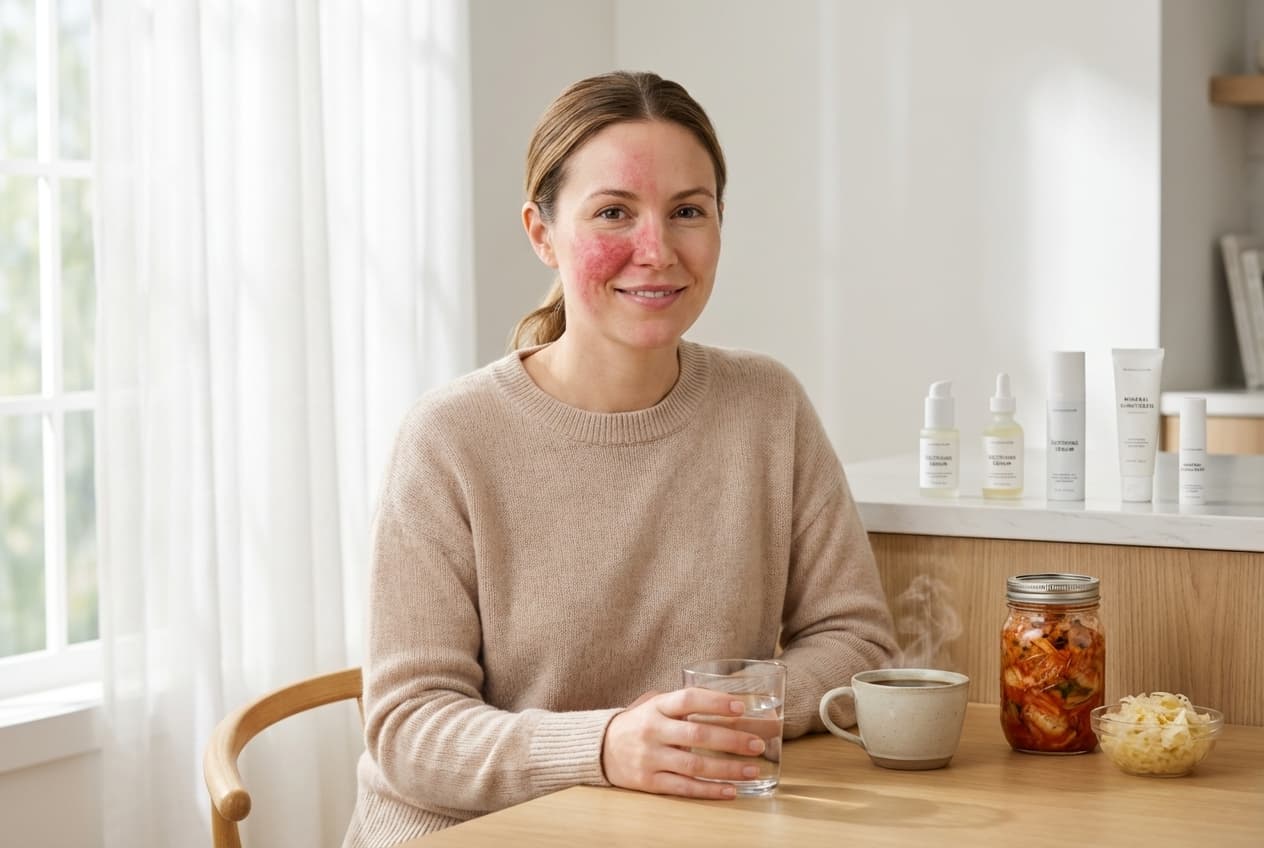
Rosacea: Triggers, Skincare Routine, and Treatments to Reduce Redness
It usually starts small. Maybe you flush a little too easily after a glass of wine. Or a spicy meal leaves your cheeks burning for an hour. Over time, the redness may linger longer than it used to. You might notice small, spider-like veins, and sometimes acne-like bumps.
If this sounds familiar, you are not just “blushing.” Rosacea could be the reason.
Rosacea is a common, long-term skin condition. It is often mistaken for acne or sunburn, so people treat it the wrong way and accidentally make it worse. For many, it is not only physical. Unpredictable flare-ups can affect confidence and social comfort.
The good news is that rosacea is often manageable. When you learn your triggers, protect your skin barrier, and use the right treatments for your rosacea type, you can reduce flares and calm persistent redness.
Quick plan (start here)
Week 1: Start a trigger diary and simplify skincare to gentle cleanser + moisturizer + sunscreen.
Week 2: Identify the top triggers that reliably cause flushing and adjust the easiest ones first (usually sun and heat).
Week 3 and beyond: If bumps, persistent redness, or eye symptoms continue, book a dermatology visit for targeted treatment.
1. What is rosacea, really?
To treat it, you have to understand it. Think of the tiny blood vessels in your face like elastic bands. In typical skin, those vessels widen (dilate) during heat or embarrassment and then tighten back up. With rosacea, that response can become overactive and harder to “reset,” which can contribute to persistent redness and visible surface vessels over time.
It is not “adult acne”
One of the most common mistakes is treating rosacea like acne with harsh products.
Acne is mainly driven by clogged pores and other factors.
Rosacea is strongly linked to inflammation and blood-vessel reactivity, and it often comes with sensitivity.
Strong acne actives can irritate rosacea-prone skin and increase stinging, dryness, and redness. If you are unsure, a dermatologist’s diagnosis is the best first step.
2. The detective work: identifying your triggers
Rosacea triggers vary from person to person. What causes a flare for you might be fine for someone else. Still, there are common patterns that show up again and again.
Common trigger clusters
Sun exposure: A frequent trigger. UV can worsen sensitivity and flushing, and it can contribute to long-term redness.
Heat and weather: Hot showers, saunas, cooking heat, humid days, and even cold wind can provoke symptoms.
Emotional stress: Stress can increase flushing through nervous-system signals and blood-flow changes.
Dietary triggers: Alcohol (often red wine), spicy foods, and very hot drinks can cause flushing in many people, but not all.
The trigger diary (simple and effective)
You cannot avoid everything. The goal is to learn your highest-impact triggers so you can live normally without constant flares.
Action step: For 2 weeks, note what you ate or drank, weather and temperature exposure, stress level, and any new skincare. Then note when symptoms show up and how long they last. Patterns usually appear quickly.
3. Skincare strategy: “less is more”
Many people with rosacea have a fragile skin barrier. That can mean irritants enter more easily and moisture escapes more quickly. Your goal is to calm inflammation and rebuild the barrier, not chase a dozen “active” ingredients.
Ingredients many rosacea patients find irritating
Not everyone reacts to the same things, but these commonly cause stinging or flares:
Fragrance: includes essential oils and scented extracts.
High-alcohol toners: can worsen dryness and irritation.
Menthol, camphor, and strong “cooling” agents: can feel soothing but often irritate sensitive skin.
Physical scrubs and harsh brushes: can inflame and disrupt the barrier.
A simple routine that works for most people
Step 1: Cleanse
Use a gentle, non-stripping cleanser. If your skin feels tight or “squeaky” after washing, it is probably too harsh. Wash with lukewarm water, not hot.
Step 2: Moisturize
Consistent hydration helps the barrier recover. Look for formulas that include ceramides (barrier support) and humectants like hyaluronic acid. Niacinamide helps some people, but a small group finds it irritating, so introduce it slowly.
Step 3: Protect
Daily sunscreen is one of the biggest levers for long-term improvement. If sunscreens sting or trigger flushing, many people tolerate mineral sunscreens better, especially fragrance-free formulas with zinc oxide, titanium dioxide, or both.
4. Treatment options: when skincare is not enough
Skincare and trigger control help a lot, but persistent redness, frequent flares, or acne-like bumps often need medical treatment. A dermatologist can tailor therapy based on your subtype and symptoms.
Over-the-counter support
Soothing ingredients: Some OTC products include calming botanicals (for example, green tea) that may reduce the look and feel of irritation. Think of these as support, not a replacement for medical treatment when symptoms are significant.
Color correction: Green-tinted products can neutralize visible redness and help confidence while treatment works.
Prescription options (discuss with a clinician)
Anti-inflammatory topicals: Metronidazole and azelaic acid are commonly used to reduce inflammation and bumps in certain rosacea types.
Redness reducers: Brimonidine and oxymetazoline can temporarily reduce visible redness by narrowing superficial blood vessels, often for up to around 12 hours. Some people experience rebound redness, so professional guidance matters.
Oral anti-inflammatory therapy: Low-dose doxycycline is often used for inflammatory rosacea. At low doses, its main role is anti-inflammatory rather than antibacterial.
Laser and light therapy
For visible broken capillaries and persistent redness, vascular lasers and IPL can reduce the appearance of surface vessels. These are clinic-based procedures and typically require multiple sessions.
5. Lifestyle adjustments for cooler, calmer skin
Exercise smarter
High-intensity workouts can provoke flushing. You do not have to stop exercising. Try exercising in a cool environment, use a cool towel around the neck, and sip cold water during the session. Some people do better with shorter intervals and longer rest.
Food and drink swaps
Alcohol: If alcohol triggers you, reduce quantity and pace it with water. Many people find red wine more triggering than some clear spirits, but responses vary.
Spicy food: If heat is a trigger, try flavor-forward spices that are not “hot,” such as turmeric, coriander, cumin, oregano, or smoked paprika in small amounts, and test your tolerance.
6. When to see a doctor
Rosacea can worsen over time for some people, and early care can reduce long-term redness and discomfort.
Consider booking an appointment if:
Your products sting or burn even when labeled “sensitive.”
Redness affects your work or social life.
You have bumps that do not improve with gentle care.
Your eyes feel dry, gritty, or irritated because ocular rosacea is possible and needs treatment.
Summary: you have more control than it feels like
Facial redness can be frustrating, but it is not a character flaw or “bad skin.” Rosacea is a real inflammatory condition, and it responds to a consistent plan.
Start with a trigger diary, simplify your routine, protect your skin daily with a tolerable sunscreen, and ask for professional help if symptoms persist. The goal is calm, predictable skin, not perfection.
Consult a professional
If you are unsure which routine or treatment fits your symptoms, stop guessing. Schedule a consultation with a dermatologist. If you are starting a new prescription or OTC routine, your pharmacist can help you choose products that are less likely to irritate sensitive skin.
FAQ
Is rosacea the same as acne?
No. Rosacea can cause acne-like bumps, but it is primarily an inflammatory and blood-vessel reactivity condition, and many acne products can irritate it.
What is the most common rosacea trigger?
Sun and heat are common triggers, but the most important trigger is the one that reliably affects you. A short diary is the fastest way to find yours.
What is the best sunscreen for rosacea?
The best sunscreen is the one you can wear daily without stinging. Many people do well with fragrance-free mineral sunscreens using zinc oxide and titanium dioxide.
Can prescription gels reduce redness quickly?
Yes. Some prescriptions temporarily reduce redness by narrowing superficial vessels, often for around 12 hours. They are helpful for some people and irritating for others, so clinician guidance is important.
Could rosacea affect my eyes?
Yes. Ocular rosacea can cause dryness, irritation, gritty sensation, and redness. Persistent eye symptoms should be evaluated because treatment can prevent complications.